





Are Fishing Clothes Waterproof?
Not all fishing clothes are waterproof. Some Fishing Wear is designed primarily for sun protection, breathability, and quick drying, while waterproof fishing clothing uses coated or laminated fabrics, sealed seams, and water-resistant closures to prevent rain and spray from reaching the wearer. The level of protection depends on the fabric construction, waterproof rating, seam treatment, and garment design. For B2B buyers, choosing between water-resistant, waterproof, and fully waterproof Fishing Apparel should be based on the fishing environment, exposure time, weather conditions, and required mobility rather than the product name alone.
What Makes Fishing Clothes Waterproof?
Waterproof performance is not created by fabric alone. A reliable waterproof fishing garment is a system consisting of the outer fabric, membrane or coating, seam construction, closures, and garment pattern. Each component has to work together to limit water penetration.
In practical applications, manufacturers commonly use synthetic fabrics such as polyester or nylon because they offer a useful combination of abrasion resistance, dimensional stability, low weight, and compatibility with waterproof coatings. These fabrics can then be treated with a polyurethane (PU), polyvinyl chloride (PVC), or other functional coating, or combined with a waterproof-breathable membrane.
The basic principle is simple: the material creates a continuous barrier that prevents liquid water from passing through the fabric. At the same time, some advanced constructions allow water vapor generated by the body to escape, helping reduce internal condensation during physical activity.
Waterproof vs. Water-Resistant Fishing Clothing
One of the most important distinctions for buyers is the difference between waterproof and water-resistant Fishing Clothing.
Water-resistant garments can repel light rain, splashes, and short periods of moisture exposure. They may rely on a durable water-repellent (DWR) finish or tightly woven fabric. However, water resistance normally decreases under prolonged rainfall, high water pressure, or repeated washing.
Waterproof fishing clothes are constructed to provide a much stronger barrier against water penetration. Depending on the product, this may involve a waterproof coating, membrane, laminated fabric, taped seams, waterproof zippers, storm flaps, and adjustable cuffs.
| Garment Type | Typical Protection | Suitable Applications |
|---|---|---|
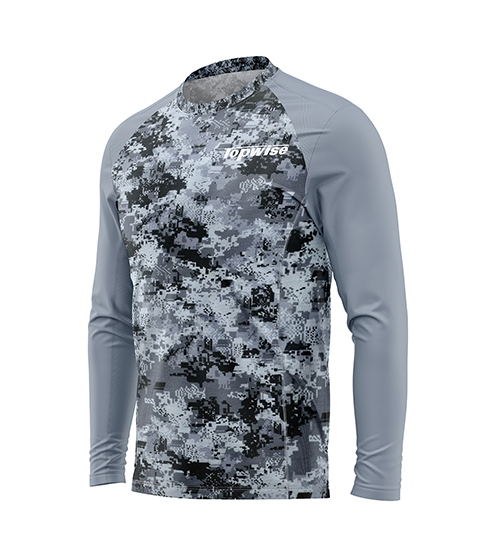
| Quick-Dry Fishing Shirt | Usually not waterproof | Hot-weather fishing, sun protection, everyday outdoor use |
| Water-Resistant Jacket | Light rain and splashes | Short outdoor trips and changing weather |
| Waterproof Fishing Jacket | Protection against sustained rain and spray | Offshore fishing, boat fishing, wet-weather operations |
| Waterproof Bib or Wader | High protection around the lower body | Wading, heavy rain, commercial and professional fishing |
Materials Used in Waterproof Fishing Wear
Polyester and Nylon Shell Fabrics
Polyester and nylon are two common base materials for Fishing Clothes. Polyester generally provides good resistance to moisture, UV exposure, and dimensional changes, while nylon is known for its strength and abrasion resistance.
The fabric weight is also important. A lightweight shell may improve mobility and packability, while a heavier construction can provide greater durability for demanding offshore or commercial environments. Buyers should therefore evaluate fabric weight together with coating performance rather than selecting material based only on thickness.
PU and PVC Coatings
PU coatings are widely used when manufacturers need a relatively flexible waterproof barrier without making the garment excessively rigid. PVC coatings can provide strong resistance to water and are useful in applications where waterproofing and durability are priorities.
However, coating selection affects hand feel, flexibility, breathability, temperature performance, and garment weight. A highly waterproof fabric is not automatically the most comfortable option for active fishing.
Waterproof-Breathable Membranes
For premium Fishing Apparel, membrane-based constructions can provide a balance between water protection and moisture-vapor management. The membrane is usually laminated between textile layers and designed to limit liquid water penetration while allowing some water vapor to move outward.
This is particularly useful for anglers who spend long periods moving, casting, operating equipment, or working on a boat. Breathability can help reduce the accumulation of sweat inside the garment, although actual performance depends on the complete fabric system, temperature, humidity, and garment ventilation.
How Waterproof Fishing Clothing Is Manufactured
The manufacturing process has a direct influence on final waterproof performance. Even a highly waterproof fabric can fail if the garment construction creates unprotected openings.
Fabric Preparation and Coating
The selected polyester or nylon fabric is first prepared for coating or lamination. Depending on the design, the fabric may receive a PU, PVC, or other functional coating. The coating thickness and uniformity need to be controlled because insufficient coverage can create weak points, while excessive coating can increase weight and reduce flexibility.
Cutting and Sewing
After fabric preparation, panels are cut according to the garment pattern. Waterproof Fishing Wear requires careful control of seam placement because every needle hole can potentially become a water-entry point.
Critical areas such as shoulders, sleeves, pockets, crotch seams, and side seams require particular attention. Seam construction may use specialized stitching or reinforcement depending on the intended protection level.
Seam Sealing
For garments intended for sustained wet conditions, seam sealing is often essential. Waterproof tape can be applied over internal seams using controlled heat and pressure. The tape covers needle holes and helps create a continuous barrier across the sewn construction.
Heat-sealing parameters need to be matched to the fabric and tape system. Excessive heat can damage coatings or membranes, while insufficient heat or pressure may result in incomplete bonding.
Final Assembly and Inspection
Waterproof zippers, storm flaps, adjustable cuffs, drawcords, hood systems, and pocket constructions are installed during final assembly. Manufacturers should then inspect critical areas for defects such as coating damage, open seams, poor tape adhesion, zipper leakage, and inconsistent stitching.
Key Technical Parameters for Buyers
When sourcing waterproof Fishing Gear Clothing, buyers should request technical specifications rather than relying on terms such as “waterproof” or “rainproof.” Several parameters can help compare products objectively.
Hydrostatic pressure: Waterproof fabric performance is often expressed as a water column or hydrostatic pressure value. Higher values generally indicate greater resistance to water penetration under laboratory testing conditions.
Breathability: Moisture-vapor transmission is relevant when the wearer is physically active. A waterproof garment with poor vapor management can feel hot and damp even though external water does not penetrate.
Seam sealing: Buyers should confirm whether all seams, critical seams, or no seams are taped. The distinction can significantly affect real-world performance.
Fabric weight: Lightweight constructions are easier to pack and more comfortable for active users, while heavier fabrics may be more suitable for abrasive working environments.
Durability: Fishing garments can encounter hooks, fishing lines, boat hardware, rocks, saltwater, and repeated movement. Abrasion resistance and coating durability should therefore be considered alongside waterproof performance.
Does Waterproof Mean Breathable?
No. Waterproofing and breathability are different performance characteristics. A completely impermeable material may provide strong protection from liquid water but can also trap heat and moisture inside the garment.
This is why professional Fishing Outfit selection often depends on the balance between waterproof protection and moisture management. For high-output activities, a waterproof-breathable shell may be preferable. For standing in heavy rain with limited movement, a heavier waterproof construction may be acceptable.
Are Waterproof Fishing Clothes Suitable for Every Fishing Environment?
No single garment construction is ideal for every environment. The correct specification depends on exposure and activity.
Offshore fishing: Offshore anglers can experience wind, rain, sea spray, and rapidly changing weather. Waterproof jackets, bib pants, reinforced areas, adjustable hoods, and secure closures are useful for this environment.
Freshwater fishing: Freshwater users may need less extreme waterproof protection, especially in dry climates. A breathable Fishing Shirt combined with a packable waterproof shell can provide greater versatility.
Wading: Waders require a substantially different construction because the garment may be exposed to continuous contact with water. Material durability, seam sealing, boot or stocking integration, and fit become important factors.
Hot and humid climates: Waterproof protection may not be the primary requirement. Lightweight Fishing Wear with UPF protection, moisture-wicking construction, ventilation, and quick-drying fabric can be more practical than a fully waterproof shell.
Advantages and Limitations of Waterproof Fishing Clothing
Advantages
Provides protection against rain, water spray, and wet working conditions.
Helps maintain comfort during prolonged exposure to changing weather.
Can reduce the need for multiple layers in wet environments.
Suitable for offshore, boat, commercial, and professional fishing applications.
Can be combined with windproof and breathable performance features.
Limitations
Higher waterproof performance can increase garment cost.
Coated or laminated fabrics may be less breathable than lightweight Fishing Shirts.
Waterproof garments can be heavier and less flexible than standard Fishing Clothing.
DWR finishes and coatings may lose performance through abrasion, improper washing, or long-term use.
Waterproof performance can be compromised by damaged seams, zippers, or fabric surfaces.
How to Choose Waterproof Fishing Clothes for B2B Applications
For importers, distributors, outdoor brands, and professional users, product selection should begin with the intended application rather than a predetermined material.
First, identify the environmental conditions: expected rainfall, exposure to seawater, temperature, humidity, wind, and duration of use. Next, define the required mobility and durability. A commercial fishing crew working on a vessel may require a substantially different garment from a recreational angler fishing beside a lake.
Buyers should also check whether the supplier can provide fabric specifications, waterproof test results, seam-sealing details, material composition, washing instructions, size specifications, and sample approval procedures.
For custom programs, additional factors such as logo printing, embroidery, color matching, reflective elements, pocket configuration, hood construction, zipper selection, and OEM/ODM production capability should be evaluated before mass production.
How Should Waterproof Fishing Clothes Be Maintained?
Proper care is important because waterproof performance can decrease when the outer fabric becomes contaminated or the coating is damaged. Follow the manufacturer's washing instructions and avoid cleaning methods that are incompatible with the coating or membrane.
After use in saltwater, rinsing with clean water can help remove salt deposits from the garment surface and hardware. The garment should be dried according to the manufacturer's instructions rather than exposed to excessive heat. Buyers purchasing for commercial use should also establish inspection procedures for seam tape, cuffs, zippers, and high-abrasion areas.
Frequently Asked Questions About Waterproof Fishing Wear
Are all fishing shirts waterproof?
No. Most lightweight fishing shirts are designed for UV protection, breathability, moisture management, and quick drying rather than waterproofing. A dedicated waterproof shell is generally required for prolonged rain.
What is the best material for waterproof fishing clothes?
There is no single best material for every application. Polyester and nylon shells with PU or other waterproof coatings are common choices, while laminated membrane fabrics may be preferred when breathability is also important.
Are waterproof fishing clothes breathable?
Some are, but waterproofing does not automatically mean breathability. Membrane construction, fabric structure, ventilation, and garment design all affect moisture-vapor management.
Can fishing clothes be waterproof and lightweight?
Yes. Lightweight synthetic fabrics, thin functional coatings, and carefully designed seam construction can produce relatively lightweight waterproof garments. However, reducing fabric weight may affect abrasion resistance and long-term durability, so the specification should match the intended use.
What should wholesalers look for in a Fishing Wear supplier?
Wholesalers should evaluate material consistency, waterproof testing, seam-sealing capability, production quality control, sizing accuracy, customization capability, minimum order quantity, lead time, and the supplier's ability to maintain consistent specifications across production batches.
Conclusion
Fishing clothes are not automatically waterproof. The actual level of water protection comes from the interaction between fabric construction, waterproof coating or membrane, seam sealing, closures, and overall garment design. For B2B buyers, the most suitable Fishing Wear should be selected according to the operating environment, exposure level, breathability requirements, durability expectations, and intended use.
A well-designed range of Fishing Apparel may therefore include lightweight sun-protection shirts, quick-dry Fishing Clothes, water-resistant jackets, and fully waterproof outer layers rather than relying on one garment for every condition. Understanding these technical differences allows importers, distributors, and professional users to specify products more accurately and reduce performance problems after delivery.