





MMA Shorts should fit securely around the waist while leaving enough room through the hips, seat, and thighs for unrestricted movement. They should not feel as tight as compression leggings, nor should they hang so loosely that they slide, twist, or bunch during training. The ideal fit allows an athlete to kick, squat, sprawl, wrestle, and transition on the ground without constantly adjusting the garment.
For athletes, the right fit improves comfort and reduces distractions during training. For retailers, wholesalers, and brands sourcing MMA shorts, understanding the relationship between garment fit, fabric stretch, waistband construction, and movement is essential when selecting products or developing a private-label range.
How Should MMA Shorts Fit Around the Waist and Legs?
The waistband should sit securely at the natural waist or at the position intended by the garment design. It should stay in place during rapid changes of direction and ground movement without pressing uncomfortably into the abdomen. An elastic waistband combined with an adjustable drawstring or a secure hook-and-loop closure can help accommodate different body shapes.
Across the hips and thighs, MMA shorts should provide functional ease rather than a tight, body-hugging fit. When an athlete raises a knee, performs a deep squat, or extends a leg for a high kick, the fabric should move without pulling sharply across the crotch or restricting the thigh.
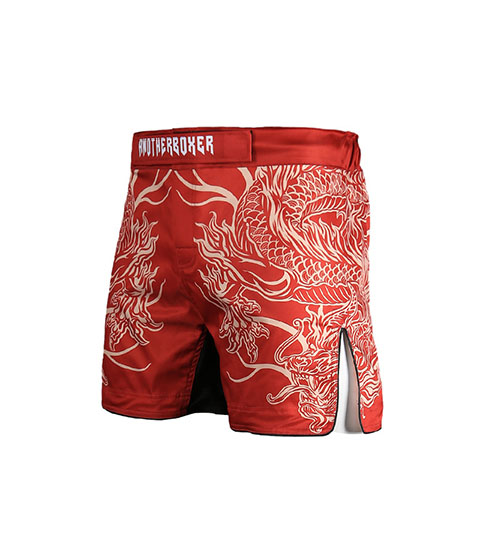
Most traditional mixed martial arts shorts use a relatively relaxed outer fit. Compression-style Fight Shorts are different: they are designed to sit close to the skin and follow the body's shape. These two constructions should not be evaluated using the same fit expectations.
Why Is the Correct Fit Important in Mixed Martial Arts?
Mixed martial arts combines striking, wrestling, takedowns, and ground fighting. Each movement places different demands on clothing. A pair of shorts that feels comfortable while standing may become restrictive during a wide stance or shift out of position during a scramble.
If the waist is too loose, the shorts may slide down when an athlete changes levels or works from the ground. If the leg opening is too narrow, it can pull against the thigh during kicks and deep hip movements. Excess fabric may also bunch around the crotch or become uncomfortable when the athlete is pressed against the mat.
A secure fit is therefore not simply a matter of appearance. It depends on the relationship between the waistband, rise, leg opening, inseam, gusset, and fabric recovery. Well-designed MMA Fight Shorts should remain stable while allowing the athlete to move naturally.
What Are the Signs That MMA Shorts Are Too Tight?
Shorts that are too tight usually reveal the problem during movement rather than when the athlete is standing still. Common warning signs include strong tension across the hips, restricted high kicks, discomfort around the crotch, and a waistband that digs into the abdomen.
Another issue is excessive tension at the seams. When the athlete performs a deep squat or a wide wrestling stance, the fabric and stitching around the crotch and inner thigh experience additional stress. If the garment has insufficient ease or poorly positioned seams, repeated movement may lead to seam strain or premature damage.
For manufacturers, fit testing should include dynamic movements rather than relying only on a static fitting model. A useful evaluation can include high knees, deep squats, lunges, side steps, and controlled sprawls. Inspectors should observe whether the fabric pulls, the waistband rolls, or the leg openings restrict movement.
Can MMA Shorts Be Too Loose?
Yes. MMA shorts need enough room for movement, but excessive looseness can create a different set of problems. A waistband that does not hold its position may require constant adjustment. Oversized legs can twist during kicks, while excess material may gather underneath the body during grappling.
Loose board-style designs can still work well when the pattern is properly developed. The key is to create enough space around the hips and thighs without allowing the garment to move unpredictably. Side slits, stretch panels, and an ergonomic gusset can provide additional mobility without making the entire garment oversized.
For MMA training shorts intended for mixed striking and grappling sessions, buyers should evaluate the balance between leg coverage, movement, and fabric control. A design that looks roomy on a product photograph may behave differently during actual training.
How Do Fabric and Construction Affect MMA Shorts Fit?
Fabric selection has a direct influence on how MMA shorts fit and perform. Lightweight polyester fabrics are commonly used for woven fight shorts because they can provide a balance of durability, low weight, and moisture management. Polyester blended with elastane adds stretch, which can help the garment follow body movement.
For compression-oriented designs, polyester-spandex or nylon-spandex blends are common choices. These materials need sufficient stretch and recovery. Stretch allows the garment to expand during movement, while recovery helps it return to its original shape after repeated use.
Construction details matter just as much as the material composition. A gusset can create additional room at the crotch and reduce concentrated tension. Reinforced stitching at high-stress seams can improve durability. Flat or low-profile seam finishes may also reduce friction against the skin.
When sourcing MMA combat shorts, buyers should request information about fabric composition, fabric weight, stretch direction, colorfastness, seam construction, and shrinkage after washing. These details help distinguish a product designed for repeated training from one intended mainly for casual wear.
How Should Buyers Check MMA Shorts Sizing Before Bulk Orders?
Retailers and importers should not rely on S, M, L, and XL labels alone. Sizing standards vary between brands and factories, and two products carrying the same size label may have different waist, hip, and leg measurements.
A practical size specification should include waist circumference, hip circumference, front rise, back rise, outseam, inseam, and leg opening. Buyers should also confirm whether measurements are taken with the garment laid flat or measured around the full circumference.
Before approving bulk production, request a sample in several sizes and compare the actual measurements with the approved specification. Fit tests should be carried out on different body types. The sample should be checked while standing, squatting, kicking, and performing ground movements.
For a wholesale MMA shorts programme, a clear grading rule is particularly important. Each size should increase consistently according to the agreed measurement chart. If the waist grading is correct but the thigh opening becomes too narrow in larger sizes, the product may still produce fit complaints and returns.
What Should Brands Consider When Developing Custom MMA Fight Shorts?
Brands developing custom MMA fight shorts should begin with the intended user and training environment. A product for striking-focused athletes may use a more open leg design, while MMA grappling shorts may need a closer and more controlled fit to reduce unnecessary loose fabric.
Other design decisions include waistband height, closure type, side-slit placement, gusset shape, stretch-panel location, and print method. Sublimation printing can support complex graphics across suitable polyester fabrics, while heat-transfer details and logos require testing for adhesion and durability after repeated washing.
Manufacturers should also evaluate the garment after laundering. Fabric shrinkage, color fading, seam twisting, and loss of elastic recovery can all change the original fit. A sample that performs well when new may not maintain the same dimensions after repeated training and washing.
Frequently Asked Questions About MMA Shorts Fit
Should MMA shorts be tight or loose?
Traditional MMA shorts should be secure at the waist and relaxed enough around the hips and thighs for unrestricted movement. Compression-style shorts are designed to fit closely against the body. The correct fit depends on the construction and intended use.
Should MMA shorts cover the knee?
Many traditional fight shorts finish around the mid-thigh or above the knee to allow leg movement. However, the acceptable length depends on the design and the rules of the competition organization. Athletes should check the current requirements before competing.
How do I know if my MMA shorts are the right size?
The waistband should remain stable without excessive tightening. You should be able to perform a deep squat, high knee, lunge, and sprawl without strong pulling across the hips or crotch. Always compare your measurements with the specific brand's size chart.
Are MMA board shorts suitable for grappling?
Some MMA board shorts are suitable for grappling if they have an appropriate cut, secure waistband, and no unsuitable pockets or exposed hardware. A closer-fitting design may be preferred by athletes who want to minimise excess fabric during ground work.
MMA shorts should be secure at the waist, comfortable around the hips, and flexible through the thighs. They should not squeeze the body like compression garments or hang so loosely that they shift during training. Fabric stretch, waistband construction, gusset design, and accurate sizing all contribute to a reliable fit.
For wholesalers, importers, and combat sports brands, evaluating these details before bulk purchasing can help improve product consistency, reduce sizing complaints, and develop MMA Fighting Shorts that meet the practical needs of athletes.