





Rash Guard seams can burst during stretching or grappling when the stitching cannot accommodate fabric elongation, seam construction creates excessive stress, or manufacturing defects weaken the connection between fabric panels. For combat sports brands, wholesalers, and importers, these failures can lead to product returns, customer complaints, and inconsistent product performance. Understanding why seam failure occurs requires examining the relationship between fabric elasticity, thread selection, stitch structure, pattern engineering, and production quality control.
A high-quality rash guard must withstand repeated pulling, twisting, friction, and rapid changes in body position without developing open seams. Unlike ordinary sportswear, grappling garments experience concentrated loads around the shoulders, underarms, side panels, neckline, and armholes. Manufacturers must therefore evaluate not only the strength of the materials but also how the complete garment behaves under dynamic stress. Identifying the underlying causes of seam bursting helps B2B buyers establish more reliable specifications when sourcing standard products, custom rash guards, and private-label collections.
1. Fabric Stretch and Seam Extension Are Not Properly Matched
One of the most common causes of seam bursting is a mismatch between fabric elasticity and seam extensibility. Most performance rash guards use stretch fabrics such as polyester-spandex or nylon-spandex blends. These materials can elongate significantly during movement, but the stitched seam may have a different extension limit.
When the fabric stretches beyond the seam's available extension, the sewing thread becomes the limiting component. The thread may break, individual stitches may pull through the fabric, or the needle holes may enlarge until the seam opens. This problem is especially noticeable during arm raises, shoulder rotation, bridging, and grappling movements that place the garment under multidirectional tension.
The fabric's elastane content alone does not determine seam performance. Yarn structure, fabric weight, knit density, finishing treatments, and recovery after stretching all influence how loads are distributed around the stitching. Two fabrics with similar fiber compositions may behave differently because their knitted structures and mechanical properties are not identical.
During product development, manufacturers should test fabric stretch and recovery in both the lengthwise and crosswise directions. They should then evaluate the assembled seam under comparable extension conditions. This helps determine whether the selected stitch structure can accommodate the fabric's actual movement range rather than relying on fiber-content specifications alone.
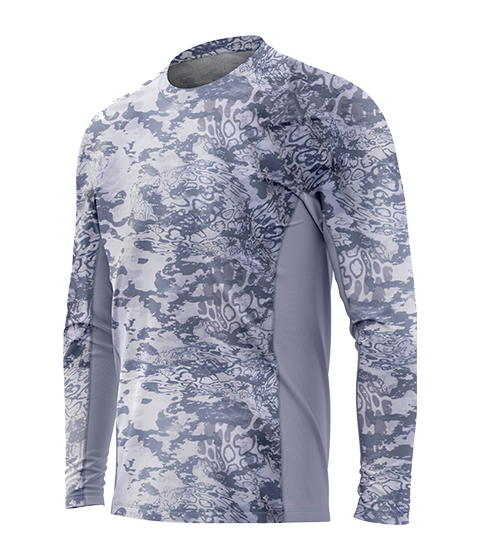
2. Incorrect Stitch Type Creates a Weak Point Under Dynamic Loads
Stitch selection directly affects how a rash guard responds to repeated stretching. A conventional lockstitch can provide secure seam formation in suitable applications, but it generally has less inherent extensibility than specialized stretch seams. If it is used in a high-stress area without appropriate construction adjustments, the seam may rupture as the garment elongates.
Stretch-oriented constructions commonly include overlock seams, coverstitching, and flatlock seams. Each serves a different purpose, and none guarantees durability when incorrectly specified or executed.
Overlock stitching: Joins fabric edges while providing some flexibility. Its performance depends on stitch formation, thread tension, stitch density, and the specific machine configuration.
Coverstitching: Commonly used for hems and selected finishing applications. It can provide stretch when the stitch formation and thread system are correctly adjusted.
Flatlock stitching: Creates a relatively flat seam profile that can reduce bulk and skin irritation. Its durability depends on the chosen stitch class, seam geometry, fabric compatibility, and correct machine setup.
A manufacturer should select the seam construction according to the location, expected load direction, and required extension. For example, an underarm seam needs to accommodate substantial arm movement, while a bottom hem must retain its integrity during repeated garment pull-up and pull-down. Using the same construction indiscriminately throughout the garment may create avoidable weak points.
For custom rash guard development, buyers should request construction samples that represent the intended garment design. Comparing different stitch configurations on the actual production fabric is more reliable than selecting a seam based solely on appearance or a supplier's general product description.
3. Thread Selection and Sewing Tension Can Trigger Seam Failure
Even when the fabric and stitch type are suitable, inappropriate sewing thread can cause premature seam bursting. Thread must provide sufficient tensile strength, abrasion resistance, and elongation to withstand the garment's expected use. A thread that is too weak may break under sudden loading, while a thread with insufficient elongation may fail before the fabric reaches its normal working extension.
Thread construction and material also matter. Polyester sewing threads are widely used in sportswear because of their strength and durability. Textured or stretch-oriented threads may be appropriate for selected looper positions or seam constructions, depending on machine compatibility and product requirements. The correct combination should be established through testing rather than assumed from fiber type alone.
Machine tension introduces another source of failure. Excessive needle-thread tension can create a tight, rigid seam that restricts fabric extension. Incorrect looper tension may cause unstable stitch formation, while insufficient tension can produce loose stitches that snag or unravel. Inconsistent tension between production runs can also create garments with visibly similar seams but different mechanical performance.
Manufacturers should verify thread specifications, needle and looper settings, stitch balance, and seam extension during setup. Operators should inspect the seam while the fabric is relaxed and stretched. If stitches become excessively tight, gaps appear, or thread loops pull out of position, the machine settings should be corrected before bulk production continues.
4. Needle Damage and Excessive Stitch Density Weaken the Fabric
Seam failure does not always begin with broken thread. Sometimes the sewing operation damages the fabric itself. Stretch knits can develop needle cuts, broken yarns, or enlarged needle holes when the wrong needle type, point geometry, or size is used. Under repeated grappling loads, these damaged areas may propagate into small tears along the seam line.
Needle selection should account for fabric construction, thickness, elasticity, and yarn characteristics. A suitable needle point helps penetrate the knit structure while reducing unnecessary damage. A needle that is too large can create oversized holes, whereas a damaged or unsuitable needle may snag yarns and leave irregular penetration marks.
Stitch density also requires careful control. Excessively dense stitching introduces more needle penetrations into a limited area, potentially weakening the fabric between holes. Conversely, insufficient stitch density can reduce seam security and allow stitches to spread under tension. The appropriate setting depends on the fabric, thread, stitch class, seam allowance, and intended performance.
During inline inspection, quality personnel should examine needle-hole patterns, skipped stitches, broken yarns, puckering, and localized fabric distortion. These defects are particularly important near armholes, shoulder seams, and curved panel intersections, where material stress and sewing complexity may overlap.
5. Pattern Design and Seam Placement Concentrate Stress
Some rash guards burst at the seams because the garment design forces too much tension onto a small area. A tight fit is normal for compression-oriented sportswear, but insufficient ease, poorly shaped panels, or restrictive armhole geometry can increase seam loading beyond the intended range.
For example, a sleeve that is too narrow may pull continuously against the armhole seam when the wearer raises an arm. An incorrectly shaped underarm panel can restrict shoulder rotation, concentrating force at the seam intersection. Similarly, a short torso pattern may cause the bottom seam to ride upward during grappling, increasing tension around the body panels.
Panel direction matters as well. Knitted fabrics often have different stretch characteristics in different directions. If panels are cut or positioned without considering their intended loading direction, the finished garment may resist movement unevenly. Poorly aligned stretch characteristics can also create twisting, seam displacement, and localized strain.
Manufacturers should assess the complete pattern through fit trials and movement testing rather than relying only on flat measurements. Relevant movements include overhead reaching, torso rotation, deep squats, bridging, and simulated grappling positions. Testing across the intended size range helps reveal whether failures are linked to garment geometry, sizing tolerances, or inconsistent grading.
6. Fabric Cutting, Panel Assembly, and Printing Can Introduce Hidden Defects
Seam reliability is influenced by operations performed before sewing. Inaccurate cutting can produce panels with inconsistent dimensions, distorted edges, or incorrect seam allowances. When operators force mismatched panels together, the seam may develop uneven tension or localized puckering that later becomes a failure point.
Fabric spreading and cutting should preserve the intended grain direction and minimize stretching or distortion. Panel identification and alignment are especially important for garments combining several colors, mesh inserts, or different fabric constructions. A seam joining materials with different elasticity may require a revised construction and additional validation.
Printing and heat-transfer processes also deserve attention. Sublimation printing is commonly used for suitable polyester-based rash guard fabrics, while other printing methods may introduce different material and process considerations. Excessive heat, unsuitable transfer conditions, or poorly controlled finishing may alter fabric hand, elasticity, or recovery in localized areas. Printing does not automatically cause seam failure, but it can contribute when the process damages the fabric or when panel construction ignores differences in material behavior.
For custom printed rash guards and personalized rash guards, suppliers should validate the actual printed fabric after processing, not only the unprinted base material. Seam samples should be produced using the same fabric, print method, curing or heat-setting conditions, thread, and sewing parameters planned for bulk production.
7. Which Quality Tests Can Identify Seam-Bursting Risks?
A reliable inspection program combines component-level tests, seam testing, and finished-garment evaluation. No single test reproduces every grappling condition, so manufacturers should select methods according to the intended product performance and buyer requirements.
Seam strength testing: Measures the force required to break a seam or cause fabric failure. ASTM D1683/D1683M is a relevant test method for sewn seams in woven fabrics; its applicability and any adaptations for stretch knits should be assessed by the testing laboratory.
Seam extension testing: Evaluates how the seam behaves as the specimen is stretched. The test should record extension, failure mode, and whether failure begins in the thread, stitch structure, or adjacent fabric.
Repeated stretch testing: Applies repeated extension cycles to reveal stitch loosening, thread fatigue, fabric damage, and progressive seam opening. Test conditions should reflect the garment's intended use.
Finished-garment movement trials: Assess seam behavior during representative movements, including shoulder rotation, torso twisting, and grappling simulations. Inspect high-stress areas before and after testing.
Visual and dimensional inspection: Checks seam allowance, stitch consistency, needle damage, panel alignment, skipped stitches, and deviations from approved construction samples.
For meaningful comparisons, buyers should establish measurable acceptance criteria before bulk production. These may include minimum seam strength, acceptable extension, allowable defect frequency, and required performance after repeated washing or wear. Test results should be interpreted alongside garment fit and failure location because a strong seam can still be unsuitable if the pattern places excessive stress on it.
8. What B2B Buyers Should Confirm Before Bulk Rash Guard Production
Overseas importers, wholesalers, and sportswear brands should treat seam durability as a product specification rather than a final inspection item. A clear technical package reduces ambiguity and helps suppliers reproduce the approved construction consistently.
Before approving an order, buyers should confirm the fabric composition and weight, stretch and recovery requirements, seam construction by garment area, thread specifications, stitching parameters, and tolerance limits. They should also request pre-production samples made with the intended materials and decoration methods. Any change in fabric supplier, thread, needle, stitch configuration, or printing process should trigger a review when it could affect seam performance.
For private label rash guards, the brand owner should document the approved sample and establish inspection criteria that the factory can follow across production batches. An OEM rash guard project should define how the buyer's technical specifications will be implemented and verified. For an ODM rash guard project, the supplier should explain the existing design's construction capabilities and identify any modifications required for the target sport or performance level.
Buyers should also request traceable inspection records, defect classifications, and corrective-action reports when failures occur. If seams burst during testing, the factory should identify the failure mechanism, adjust the relevant process, and repeat the test on a corrected sample before releasing production. Simply reinforcing the seam without investigating the cause may shift the stress to an adjacent area instead of resolving the underlying problem.
Conclusion
Rash guard seams burst during stretching or grappling when seam extensibility, thread performance, needle penetration, fabric construction, and garment geometry are not properly matched. Manufacturing variables such as sewing tension, stitch density, cutting accuracy, and printing conditions can further increase the risk. For B2B buyers, the most effective prevention strategy is to validate the complete garment under realistic movement conditions and maintain measurable quality standards throughout production.
By requiring documented seam testing, approved pre-production samples, and process-specific quality checks, brands and importers can reduce avoidable failures and improve product consistency. These controls are particularly valuable when developing custom rash guards, custom printed rash guards, and private-label collections where design complexity and production customization can introduce additional variables.