





Choosing the right fabric is one of the most important steps when creating customized women’s activewear.For any women's activewear brand,fabric determines comfort,durability,performance,and how your customers perceive your entire collection.Whether you are building your first line or upgrading a product range,fabric is not just a material—it defines how your high-quality activewear will move,breathe,and perform under real training conditions.Consumers today no longer buy sportswear only for exercise;they buy it for lifestyle,athleisure,and daily fashion.This means your fabric must meet higher expectations for softness,color fastness,stretch recovery,and long-lasting performance.
When selecting fabric for customized women’s activewear,the first factor to consider is moisture management.Breathability and sweat-wicking are essential because most fitness activities generate heat.Materials like nylon-spandex,polyester-spandex blends,and high-tech performance fibers are the most trusted options in the industry.Nylon offers a premium,smooth hand feel and excellent wear resistance,which is why many high-end women's activewear brands rely on it for leggings,sports bras,and performance tops.Polyester,on the other hand,is lightweight,fast-drying,and more cost-effective,making it ideal for large-scale production and high-volume campaigns.A well-balanced spandex content—usually 10–25%—ensures the fabric provides adequate stretch,shape retention,and freedom of movement.
Softness is also a key decision point,especially for yoga wear and athleisure pieces.Fabrics like brushed nylon,peach-skin polyester,or buttery-soft blends help create the luxury feel many high-quality activewear brands want.When customers describe leggings as“second skin,”they are referring to fabrics with micro-brushed surfaces,high elasticity,and strong rebound memory.For a customized women's activewear collection,choosing a fabric that matches your brand identity is crucial.If your audience prefers performance and compression,a sturdier,high-density material works best.If your brand focuses on comfort and minimal styling,soft and lightweight fabrics fit better.
Durability cannot be overlooked.Customized women’s activewear must withstand repeated washing,sweat,friction,and stretching,while still maintaining color,shape,and texture.Fabrics should pass tests such as color fastness,pilling resistance,and stretch recovery.High-quality leggings,for example,must maintain opacity during squats and high-intensity workouts;therefore,blends with higher GSM(weight)are recommended for full-coverage bottoms.Choosing fabrics from reliable mills with certifications like OEKO-TEX ensures both safety and environmental compliance,boosting your credibility as a responsible women's activewear brand.
Another important element is purpose-driven fabric selection.Different activities require different material characteristics.Yoga apparel benefits from soft,four-way stretch fabrics with moderate compression.Gym and running wear often need stronger elasticity,moisture-management properties,and abrasion resistance.Lifestyle wear or athleisure outfits may use cotton-spandex or modal blends to create a relaxed,fashionable look.When you plan your customized women’s activewear range,thinking about your end user’s movement,environment,and comfort expectations helps you pick the most suitable fabric.
Sustainability has also become a defining trend.Many consumers look for recycled fabrics such as RPET(recycled polyester)or eco-friendly nylon made from reclaimed waste.Using sustainable materials can differentiate your women's activewear brand,resonate with environmentally conscious audiences,and enhance your value proposition in the international market.These eco-friendly fibers perform just as well as traditional options,but offer better marketing appeal and long-term brand positioning.
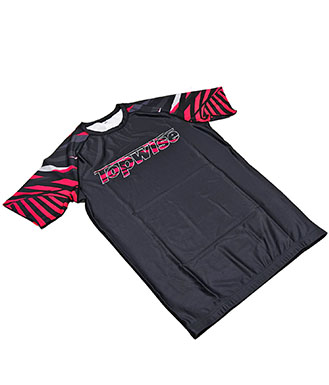
Color performance is another fabric consideration.High-quality activewear should maintain vibrant colors even after exposure to sweat,light,and repeated washing.Fabrics with high color fastness ratings are essential for customized women’s activewear,especially when producing bold tones like red,navy,or neon shades.If your brand uses sublimation printing,polyester-based materials with smooth surfaces will deliver the most vivid and detailed prints.
Lastly,working with experienced manufacturers helps ensure you choose the right fabrics.Professional factories understand GSM,stretch direction,shrinkage rate,and finishing techniques such as anti-pilling treatment or antibacterial finishing.They can recommend the best fabric based on your design,budget,and market positioning.As a women's activewear brand,collaborating closely with your manufacturer—from sampling to bulk production—ensures your customized line looks and performs exactly as expected.
In summary,choosing the best fabric for customized women’s activewear requires balancing performance,comfort,durability,sustainability,and brand identity.The right fabric transforms your design from simple clothing into high-quality activewear that customers trust and love.When you focus on breathability,softness,stretch,and long-term resilience,you create a collection that enhances your brand reputation and satisfies the growing demand for reliable,stylish,and functional women's activewear in today’s global market.