





Combat sports such as MMA, Brazilian Jiu-Jitsu (BJJ), boxing, and Muay Thai require highly specialized clothing designed for extreme physical stress. Many beginners assume that general athletic clothing is enough for training, but there is a significant difference between fight wear and regular sportswear in terms of materials, structure, durability, and performance.
Understanding this difference is essential for athletes, gyms, and brands choosing equipment such as MMA Shorts, BJJ Shorts, rash guards, and compression gear.
1. Purpose and Design Philosophy
The most fundamental difference between fight wear and regular sportswear is purpose.
Regular sportswear is designed for general fitness activities such as running, gym workouts, yoga, or cycling. The focus is comfort, flexibility, and basic moisture management.
In contrast, fight wear is designed for combat environments. It must withstand:
Grappling pressure and pulling
High-impact striking movements
Constant friction on mats or cages
Rapid directional changes
Extended sweating during sparring
Because of this, fight wear is engineered for survival under stress rather than casual performance.
For example, MMA shorts must survive explosive kicking and ground fighting, while Bjj Shorts must handle constant grip pressure and mat friction.
2. Fabric Technology Differences
Material selection is one of the biggest differences.
Regular sportswear often uses:
Basic polyester
Cotton blends
Lightweight jersey fabrics
These materials are suitable for low to medium intensity exercise but fail under combat stress.
Fight wear, however, uses advanced performance fabrics such as:
Ripstop polyester
Nylon blends
Spandex composites
Microfiber performance textiles
These materials are selected specifically for durability, flexibility, and resistance to tearing.
For instance, ripstop fabric used in MMA shorts prevents small tears from spreading, which is essential during grappling exchanges.
3. Durability and Structural Reinforcement
Regular sportswear is not designed for physical contact or friction-heavy environments. As a result, seams may loosen, fabrics may tear, and garments may lose shape quickly.
In contrast, fight wear is structurally reinforced.
Key features include:
Double or triple stitching
Reinforced crotch panels in MMA shorts
Stretch gussets for mobility
Anti-tear weaving structures
Reinforced waistbands
These reinforcements ensure durability during high-intensity training and competition.
In BJJ training, where athletes constantly pull and twist clothing, BJJ shorts must be significantly stronger than normal athletic shorts.
4. Flexibility and Range of Motion
Flexibility is another major difference.
Regular sportswear allows basic movement but is not optimized for extreme ranges such as high kicks, takedowns, or ground transitions.
Fight wear is engineered for full mobility using:
Spandex-based stretch panels
Ergonomic cutting patterns
Split-side designs in MMA shorts
Flexible waistband systems
This ensures fighters can move without restriction during explosive actions such as striking or grappling.
In BJJ shorts, flexibility is critical for guard passing, sweeps, and submissions.
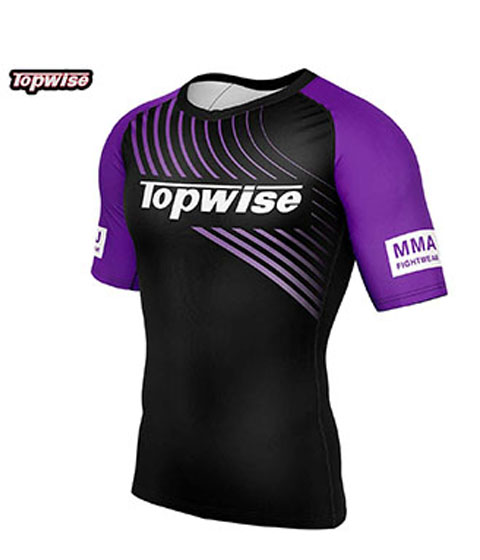
5. Moisture and Heat Management
Combat sports generate significantly more sweat than regular workouts.
Regular sportswear absorbs moisture and may become heavy or uncomfortable.
Fight wear uses moisture-wicking systems to:
Pull sweat away from the body
Maintain lightweight performance
Prevent overheating
Dry quickly after training
Materials like polyester and microfiber are widely used for this purpose.
This is especially important in long MMA sparring sessions or extended BJJ rolling rounds.
6. Weight and Performance Efficiency
Even small differences in weight affect combat performance.
Regular sportswear is not optimized for minimal weight reduction.
Fight wear, however, is designed to be:
Ultra-lightweight
Non-restrictive
Performance-optimized
For example, modern MMA shorts are significantly lighter than traditional athletic shorts while still maintaining high durability.
This allows fighters to move faster and react more efficiently.
7. Functional Design Features
Unlike regular sportswear, fight wear includes specialized functional design elements such as:
Velcro waist closures in MMA shorts
Anti-slip internal grip systems
Ventilation mesh panels
Flexible split hems
Skin-safe stitching techniques
These features are designed specifically for combat sports environments.
In contrast, regular sportswear focuses mainly on appearance and general comfort.
8. Compression and Muscle Support
Compression technology is far more advanced in fight wear.
Compression garments help:
Support muscles during explosive movement
Reduce vibration and fatigue
Improve blood circulation
Speed up recovery after training
While some regular sportswear includes compression elements, it is not optimized for combat sports demands.
Compression gear is often worn under BJJ shorts or paired with MMA shorts for training efficiency.
9. Branding and Customization
Another important difference is customization.
Regular sportswear has limited branding flexibility.
Fight wear, however, is widely used in professional gyms, teams, and competitions. A Fight Wear Manufacturer can produce:
Custom team uniforms
Sublimated graphics
Sponsor logos
Gym-branded MMA shorts and BJJ shorts
This makes fight wear a major part of combat sports identity and marketing.
Conclusion
The difference between fight wear and regular sportswear is significant in every aspect, including material, durability, structure, flexibility, and performance.
Regular sportswear is suitable for general fitness activities, but it cannot handle combat stress. Fight wear, including MMA shorts and BJJ shorts, is engineered specifically for high-intensity fighting environments.
For athletes, gyms, and brands, selecting the right Fight Wear Manufacturer ensures better durability, performance, and safety in real combat sports situations.